💧 Why is hydration so important?
Water is essential for virtually every process in the body. During exercise, its importance becomes even more obvious because, our muscles generate heat and our bodies use sweating to help us to cool down.
Depending on how much you sweat, and how heavy you breath during exercise, in addition to, how long and intensely you exercise, you can also lose electrolytes such as sodium. If you don’t replace enough of the fluid you lose, dehydration can develop.
So, what does staying hydrated help your body do during exercise?
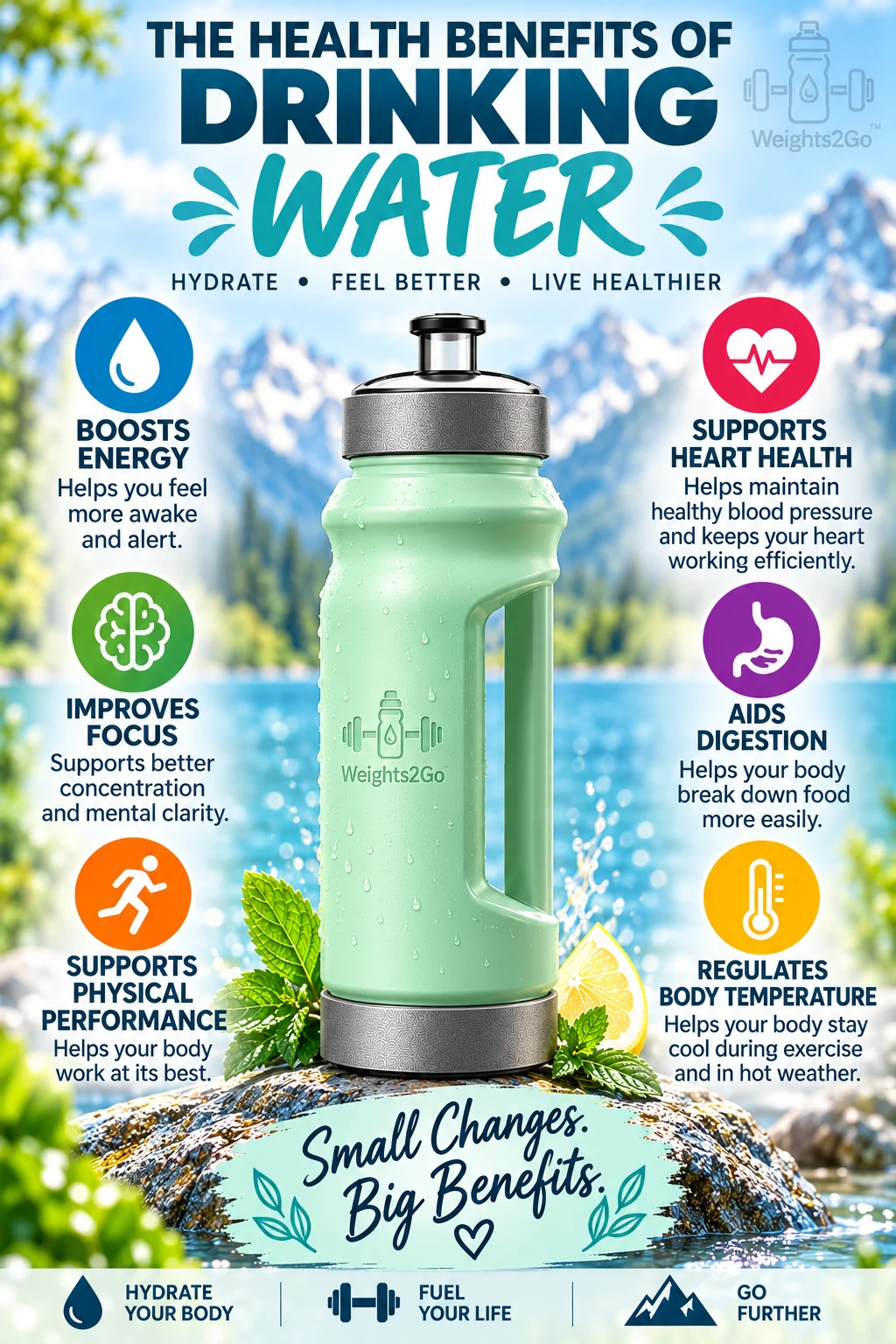
🌡️ Regulate Temperature
Sweating is one of the body’s main ways of getting rid of heat. Having enough fluid available, helps to support this cooling process. Dehydration can make it harder for your body to regulate temperature, particularly when exercising in hot conditions.
❤️ Support Cardiovascular Function
As you lose fluid through sweating, and breathing, the amount of fluid circulating in your bloodstream can decrease, and this can make your cardiovascular system work harder.
Maintaining appropriate hydration, helps to support normal circulation and cardiovascular responses.
As a personal example, I’m a member of two hiking clubs, and both recommend that hikers carry around 2 litres of water when heading out on the trails.
Of course, individual fluid needs vary depending on factors such as the weather, activity, duration, level of exertion, and, how much you sweat.
💪 Support Exercise Performance
Appropriate fluid replacement can help to support health, safety and physical performance, during exercise. How much you need, depends on the individual, and the conditions, mentioned above. The aim isn’t simply to drink as much water as possible, but to replace an appropriate amount of fluid, for your activity.
🧠 Support Normal Brain and Nervous-System Function
Significant dehydration can contribute to symptoms such as fatigue, headaches, and difficulty concentrating.
Research has also found that dehydration can affect aspects of central nervous-system function, and both, physical and mental performance.
🚶 Helps Exercise To Feel More Comfortable
As dehydration increases, exercise can often feel harder.
Dehydration combined with heat, can increase physiological strain and contribute to fatigue, making exercise feel considerably more difficult.
Staying appropriately hydrated can therefore help you to feel more comfortable while exercising, particularly during longer, or hotter activities.
🔄 Supports Recovery
After exercise, replacing fluid lost through sweating, helps to restore your body’s fluid balance.
If you’ve had a particularly long or sweaty workout, replacing electrolytes may also be important, depending on the amount of fluid and sodium that you’ve lost.
For more information, see our article about Electrolytes.
Keep Your Water With You
One of the simplest ways to stay hydrated is to make sure you actually have water available when you’re exercising.
That’s where Weights2Go fits naturally.
Our two Weighted Sports Bottles hold almost 2 litres of water as a pair, and the wide-mouth opening, which makes it easy to add ice, or if appropriate, for your activity, an electrolyte drink.
As the weighted sports bottles are designed to add light resistance, you can combine your hydration with resistance training, while walking, hiking, running, and many other exercise sessions.
Hydrate. Strengthen. Go.
Disclaimer
The information provided in this article, and on this website, is for general educational and informational purposes only. It is not intended to replace medical advice, diagnosis or treatment from a qualified healthcare professional.
If you experience rapid or unexplained weight loss or weight gain, persistent abdominal swelling or bloating, significant changes in your bowel habits, abdominal pain, or any other symptoms that concern you, please speak to your doctor.
If you are new to exercise, have an existing medical condition, are taking medication, or are unsure whether a particular exercise, diet or weight-loss approach, is suitable for you, speak to your doctor or another appropriately qualified healthcare professional, before starting or changing, your exercise programme.
Research is continually evolving, and individual responses to diet, exercise, sleep and weight loss, can vary considerably.
Research & Further Reading
Shirreffs (2005) — The Importance of Good Hydration for Work and Exercise Performance
A review examining the importance of maintaining appropriate hydration during physical activity.
Cheuvront, Carter & Sawka (2003) — Fluid Balance and Endurance Exercise Performance
Research examining hydration, fluid balance and endurance exercise performance.
Sawka et al. / American College of Sports Medicine (2007) — Exercise and Fluid Replacement
The American College of Sports Medicine position stand on fluid replacement during exercise.
Maughan & Shirreffs (2010) — Dehydration and Rehydration in Competitive Sport
A review examining dehydration, rehydration and their effects during sport.
Sawka, Montain & Latzka (2001) — Hydration Effects on Thermoregulation and Performance in the Heat
Research examining the effects of hydration status on thermoregulation and physical performance, particularly during exercise in the heat.
Convertino et al. / American College of Sports Medicine (1996) — Exercise and Fluid Replacement
An earlier American College of Sports Medicine position stand examining fluid replacement during exercise.